
How Modern Seismic Sensors Are Transforming Asset Reliability

Seismic sensors are used to measure changes in vibration in rotating and reciprocating machines in various industrial environments such as refineries.
The increasing complexity of industrial operations, increased capacity and vibration related risks have become more visible across critical assets and facilities. As industries modernize, vibration monitoring systems must evolve to keep pace with new expectations for reliability, uptime, and safety.
At Metrix, decades of experience in machine condition monitoring have shown that seismic sensors are no longer optional — they’re foundational to protecting assets, preventing downtime, and ensuring operational continuity. Even though facilities use portable data collection and monthly monitoring for their less critical assets, permanently mounted seismic sensors have proven invaluable in keeping operators informed regarding their assets in between data collection runs. If you operate facilities that have rotating and reciprocating assets, seismic sensors provide the early warning needed to avoid catastrophic failures.
The State of Seismic Sensors
Seismic sensors measure changes in vibration and structural movement across industrial environments. They are especially useful in measuring either acceleration or velocity in machines with rolling element bearings. Their purpose is simple: detect anomalies early enough to prevent equipment damage, safety hazards, or production losses.
Today’s seismic sensors are more durable and accurate than ever before. Modern industrial grade sensors—like those used in refineries, power plants, and manufacturing facilities—are engineered to withstand extreme temperatures, corrosive environments, and continuous operation.
Still, even the best sensors depend on proper placement, annual calibration checks, and integration with a plant control system to get a complete view of what’s happening with the machine. Metrix emphasizes application specific installation because each machine’s support structure, equipment layout, and vibration profile can dramatically influence sensor performance.
Advancements in Technology
Demand from industries such as mining, construction, energy, and infrastructure continues to accelerate innovation. By 2029, the vibration monitoring market is projected to reach $2.39 billion, driven by the need to protect increasingly complex machinery.
New generation seismic sensors now offer higher sensitivity, wider frequency ranges, and improved noise filtering and these capabilities align with our focus on providing dependable, field proven monitoring solutions. These advancements reduce false alarms, improve diagnostic clarity, and give operators more time to respond before minor issues escalate. Instead of relying solely on manual interpretation, modern systems integrate seamlessly with plant control systems, historians, and cloud platforms to automate data collection and analysis.
Benefits from innovation in seismic sensors include:
Real time data processing includes interrogating the 4-20 mA output from a vibration transmitter, or the output from a vibration monitoring system, to see critical vibration changes as they occur, enabling immediate action to protect personnel and equipment.
Machine learning and AI driven analytics are still a long way from providing automated diagnostics directly for customer action. The most useful systems comb through enormous amounts of data and find abnormalities that are flagged to a human expert, and then he or she makes a final diagnostic decision. Machine learning and AI systems help identify abnormal patterns, helping humans to reduce diagnostic time and improve accuracy.
Predictive maintenance utilizes predictive tools like vibration monitoring, lube oil analysis, thermography, ultrasonic testing, and motor circuit analysis to determine the condition of the machine. The best predictive maintenance programs provide information for when maintenance should be conducted, way before failures would happen and when parts really do need to be replaced. This minimizes unplanned downtime and extends equipment life.
Enhanced visualization tools like cloud dashboards and seismic data visualization tools transform raw vibration data into intuitive graphs and trend lines. Metrix customers increasingly rely on these tools to make informed decisions across refineries, chemical plants, and manufacturing facilities.
Whether you manage a single facility or a global network of plants, cloud enabled seismic monitoring reduces uncertainty and strengthens operational resilience.
Impact on Various Industries
Every industry benefits from the use of seismic sensors, but priorities differ:
● Mining - Focuses on worker safety, ground stability, and early detection of hazardous vibration events.
● Construction - Uses vibration monitoring to evaluate structural health, protect nearby buildings, and ensure compliance during excavation or heavy equipment use.
● Infrastructure - Uses seismic sensors for bridge monitoring, dam safety, and earthquake related structural assessments.
● Oil & Gas - Prioritizes monitoring of compressors, pumps, storage tanks, and pipelines to prevent leaks, failures, and costly shutdowns.
Across all sectors, Metrix solutions support both machine protection and condition monitoring, which are the two main pillars of modern reliability programs.
Challenges in Seismic Monitoring
Despite major advancements in seismic sensor technology, several challenges remain:
● Data security & privacy - As IoT (Internet of Things) connectivity expands, protecting cloud-based vibration data becomes increasingly important.
● System integration - Many facilities operate a mix of legacy and modern equipment. Ensuring compatibility with PLCs, DCS systems, and existing monitoring hardware is a top concern—one Metrix addresses through flexible and easily configurable solutions.
● Site variability - Terrain, environmental conditions, and structural differences can complicate sensor placement and calibration.
● Training & expertise - Even intuitive systems require training on installation, data interpretation, and maintenance.
● Evolving regulations - As standards shift, operators must stay informed about compliance requirements for seismic and vibration monitoring equipment.
Should You Upgrade Your Vibration Monitoring Equipment?
Seismic sensors are rapidly becoming standard across industries focused on reliability, safety, and predictive maintenance, especially for machines with rolling element bearings. As demand grows, manufacturers like Metrix continue to innovate by offering rugged sensors, configurable monitoring systems, and application specific solutions designed for real world industrial challenges.
For example, Metrix pioneered the use of impact measurements for reciprocating compressors. We improved that offering with the 5580 Signal Conditioner / SW5580 Smart Switch by using an accelerometer that can measure both impact and crosshead vibration. We offer a similar solution by using a velocity sensor to measure pump vibration and then integrating it to displacement to meet the requirements of the Hydraulic Institute.
If you're ready to modernize your vibration monitoring strategy, Metrix provides the expertise and equipment to help you stay ahead of regulatory changes, technological advancements, and operational risks.
Explore the seismic and vibration monitoring solutions offered by Metrix to begin planning your next upgrade. Learn more by browsing products that support your reliability goals.
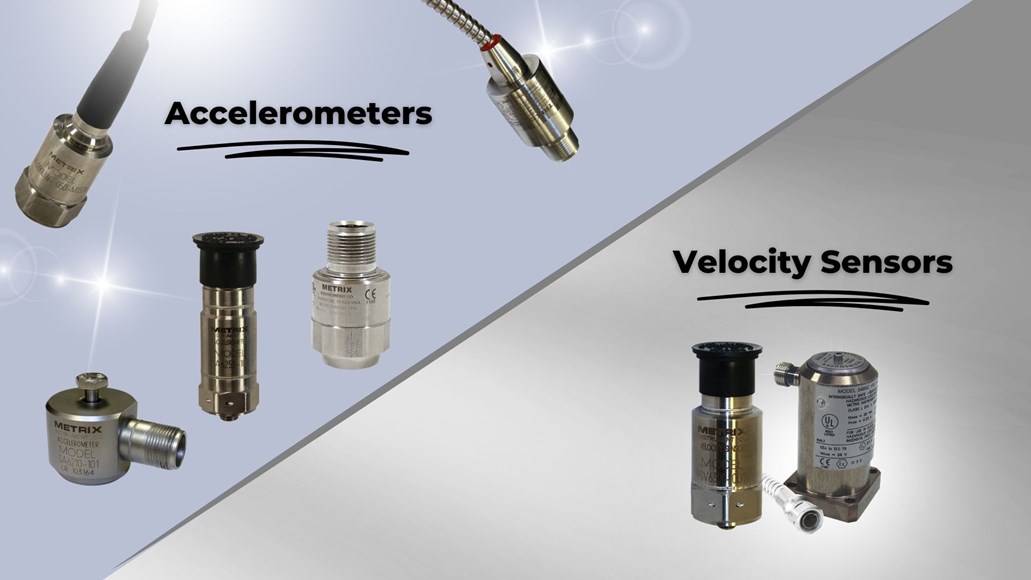
Accelerometers and Velocity Sensors from Metrix Vibration